THE MAKING OF A PAIR
HOW IT’S
MADE
MORE THAN 250 OPERATIONS.
ONE PAIR.
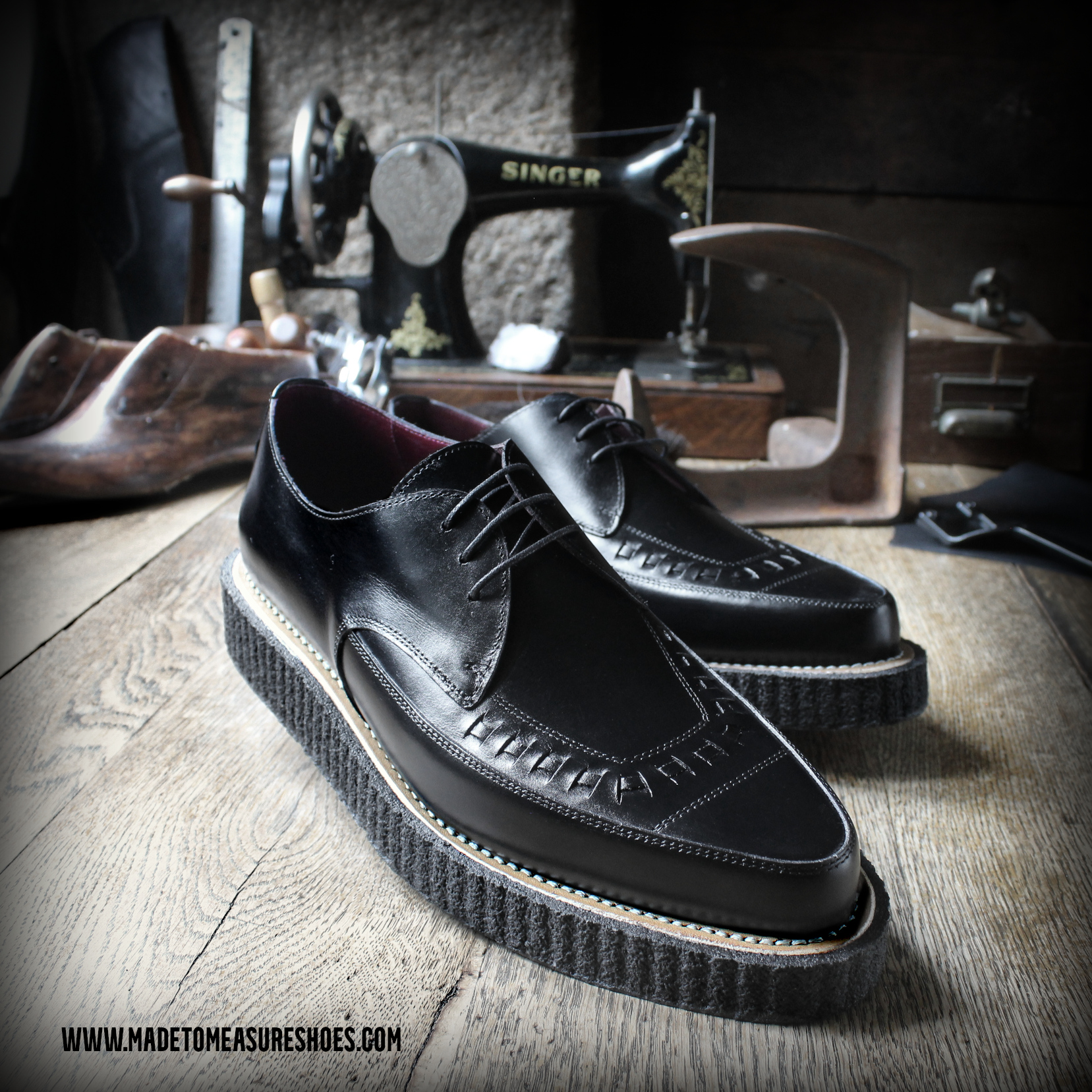
A finished pair reveals only a fraction of the work behind it.
No. 01
BEFORE THE FIRST CUT
IT STARTS
WITH THE LAST.
Before any leather is cut, the shoe has already begun to take shape.
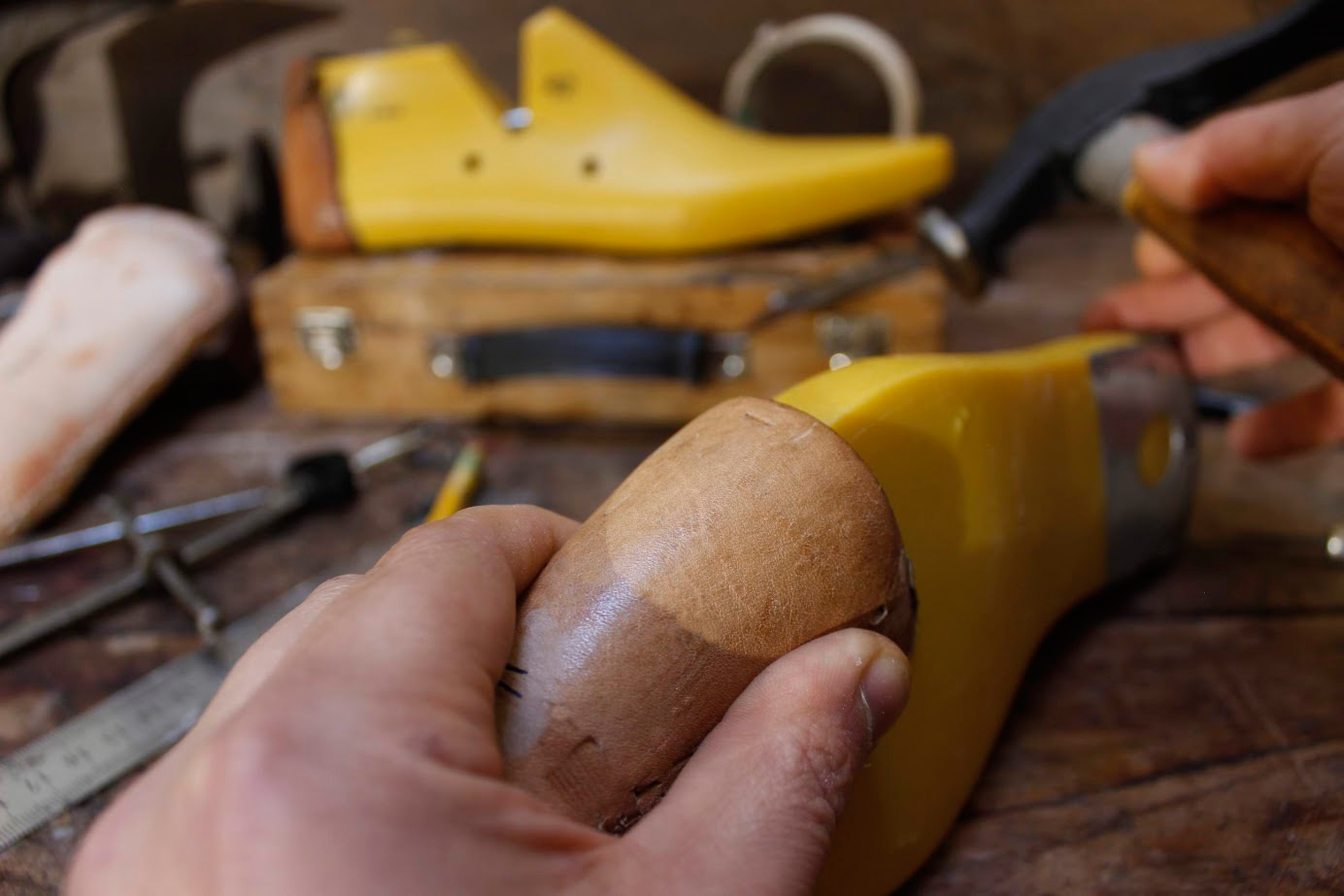
In Made to Measure work, the information gathered from the customer’s feet is used to individually adapt a base last — modifying its shape, volume and proportions to better reflect the wearer’s feet.
At this stage, width, length, volume and balance can be adjusted by hand, so the form begins to reflect the person who will eventually wear it.
There is no finished shoe yet. But the process has already begun.
No. 02
FROM LAST TO PATTERN
THE SHOE BECOMES
A PATTERN.
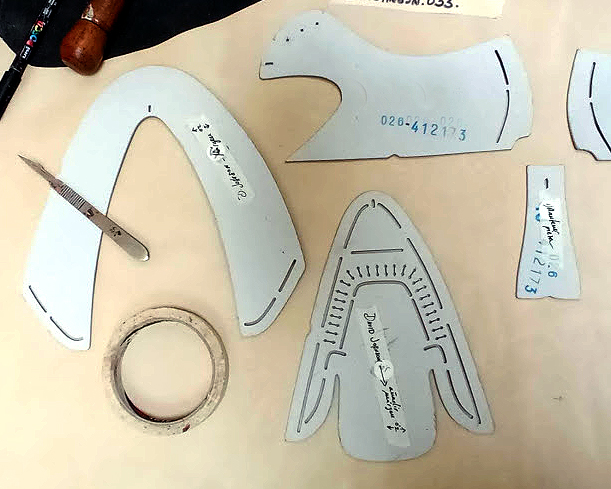
Once the last has been adapted, the pattern is developed around its actual shape.
The lines that define the vamp, quarters, facings, seams and overlaps are translated into individual pieces that will later form the upper.
This is where design and construction begin to meet. Small changes in proportion can alter the balance, appearance and fit of the finished shoe.
Before leather is cut, every line has to make sense.
No. 03
FROM PATTERN TO LEATHER
EVERY CUT
IS A DECISION.
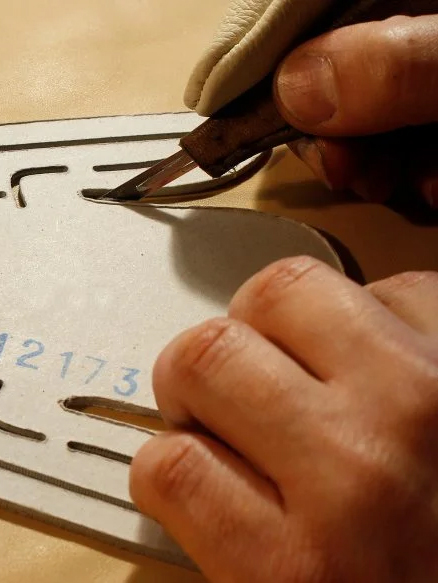
Once the pattern is ready, each component is transferred to the selected leather and cut individually by hand.
Grain, direction, flexibility and visible character all have to be considered before the blade touches the leather.
What may look like a simple outline is already part of the balance, symmetry and final appearance of the pair.
Every piece has a place. Every cut has a reason.
No. 04
PIECE BY PIECE
THE UPPER
TAKES SHAPE.
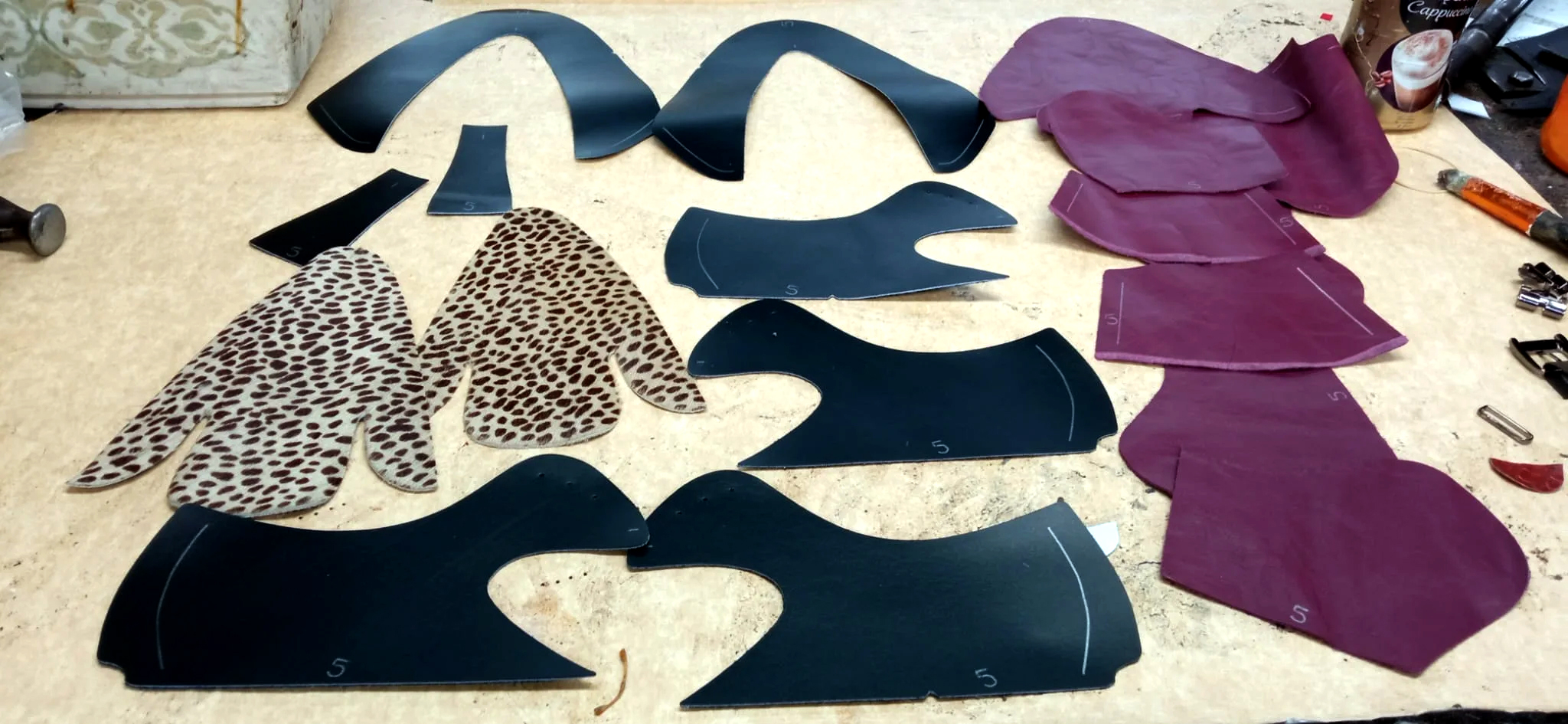
Once the individual pieces have been cut, they are prepared for assembly.
Edges are reduced where necessary, reinforcements are introduced, linings are prepared and each component is placed in the sequence in which it will later be joined.
On a complex design, different leathers, colours and textures may all have to meet within the same few millimetres.
Separate pieces become one structure. The shoe begins to be recognisable.
No. 05
CLOSING THE UPPER
STITCH
BY STITCH.
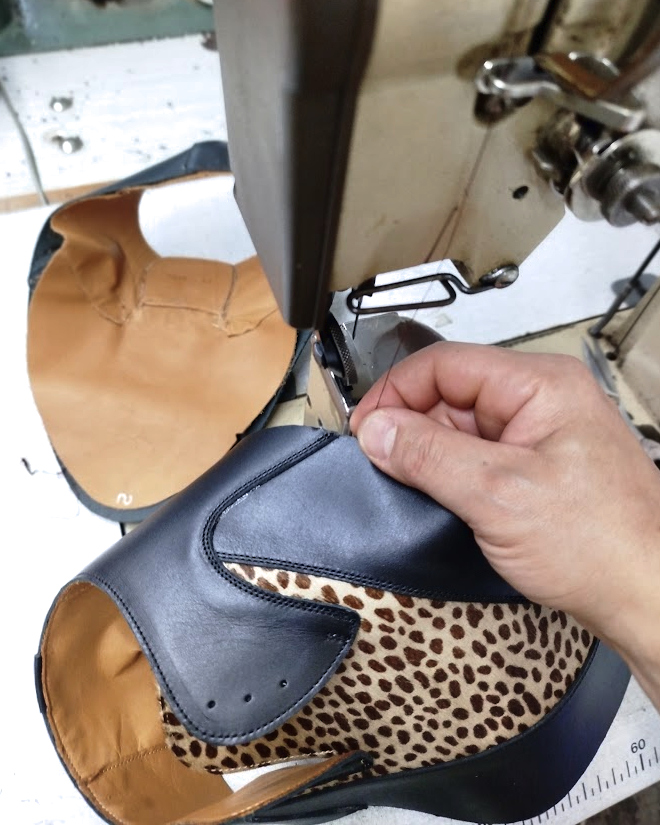
Once the pieces have been prepared, they are assembled and stitched together to form the upper.
Each seam has both a structural and a visual purpose. Alignment, tension and distance from the edge must remain consistent as different components become a single form.
Depending on the design, different leathers, textures, linings and decorative elements may all have to meet within the same construction.
Stitch by stitch, separate pieces become one upper.
No. 06
LASTING
THE SHOE FINDS
ITS SHAPE.
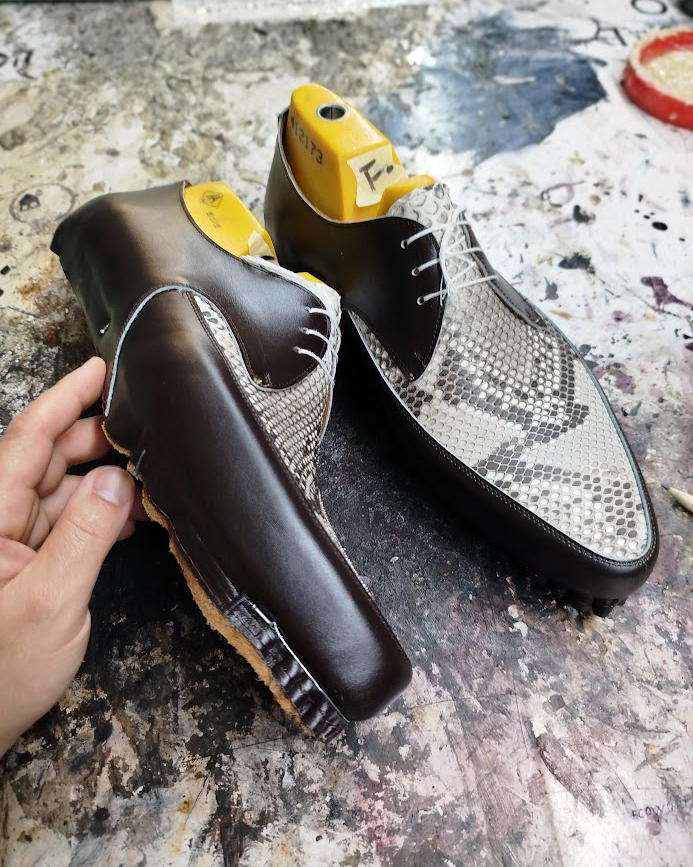
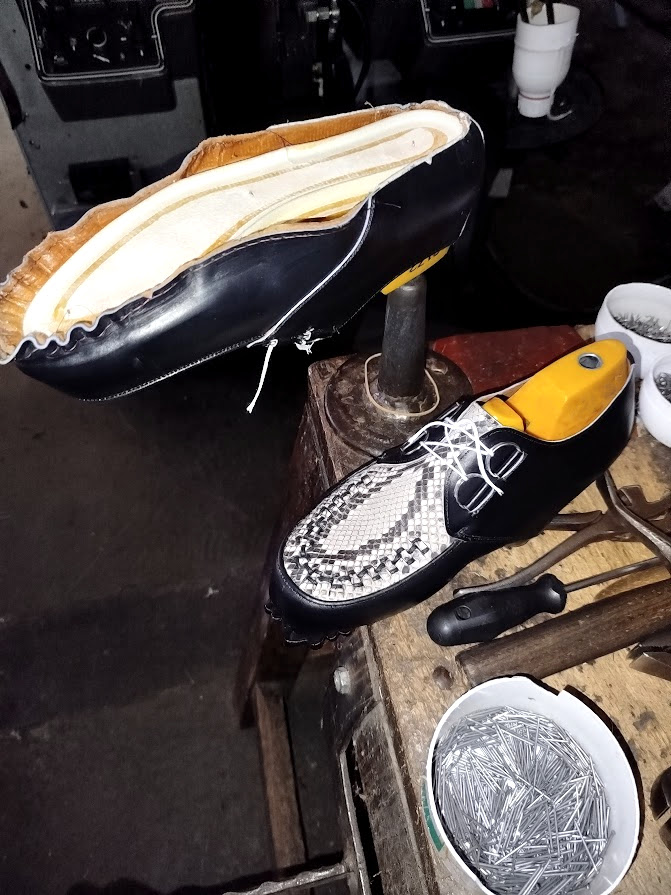
Once the upper has been closed, it is placed over the adapted last and carefully pulled, centred and tensioned around it.
The leather must follow the form correctly through the toe, waist and heel. Too much or too little tension can change both the line of the shoe and the way it will eventually fit.
The upper is progressively secured around the underside while the last gives the shoe its final three-dimensional form.
Until now, we had an upper. Now the shoe has found its shape.

No. 07
GOODYEAR WELTING
BUILT TO HOLD
TOGETHER.
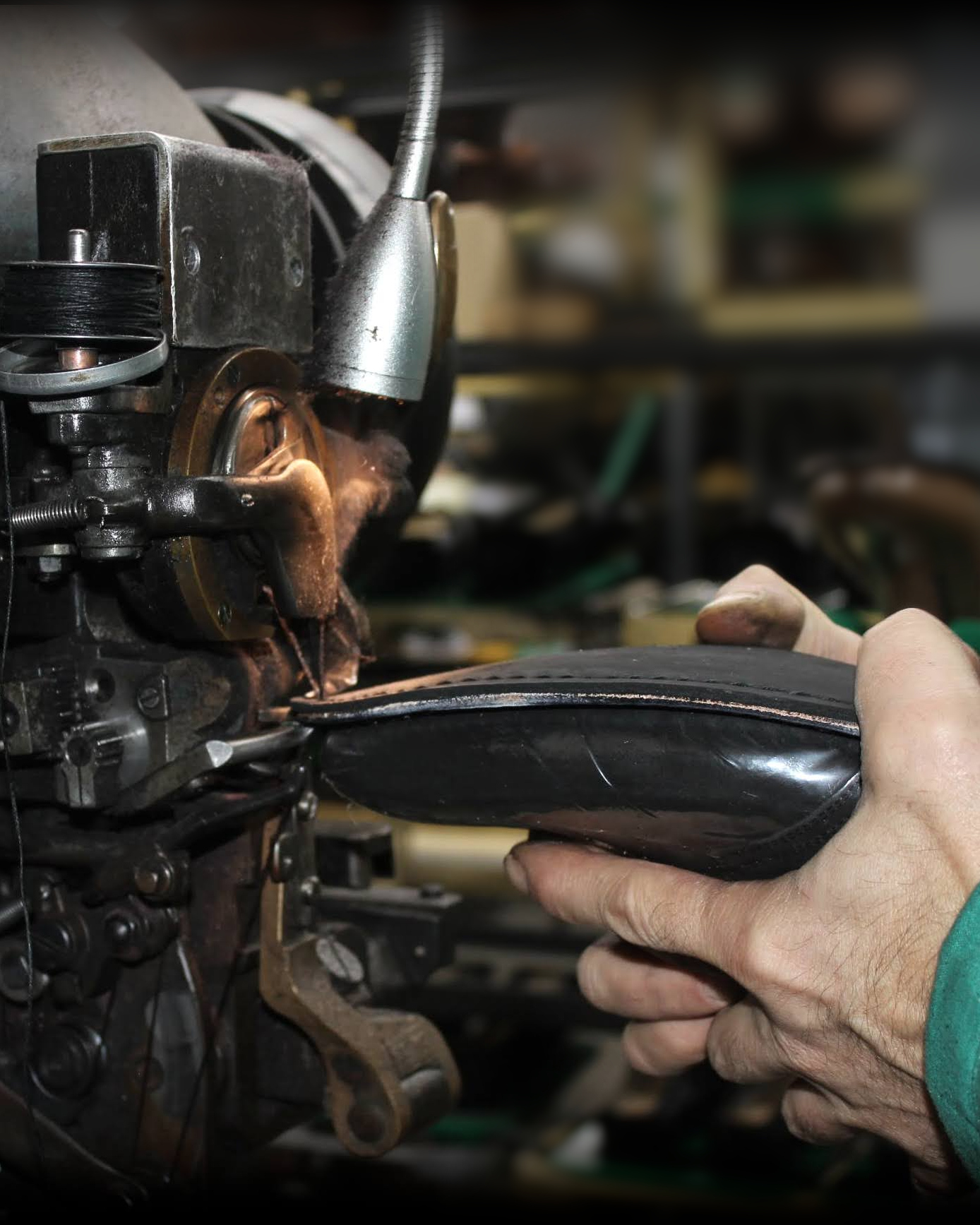
With the upper lasted, the welt is stitched around the perimeter of the shoe, joining it to the insole structure.
The machine follows the contour while the shoemaker controls position, tension and feed by hand. The stitch must remain consistent through the changing curves of toe, waist and heel.
Later, the outsole will be stitched to this welt, creating the characteristic layered structure of Goodyear construction.
The welt is not decoration. It is part of the structure.
No. 08
BUILDING THE BOTTOM
WHAT YOU DON’T SEE
MATTERS.
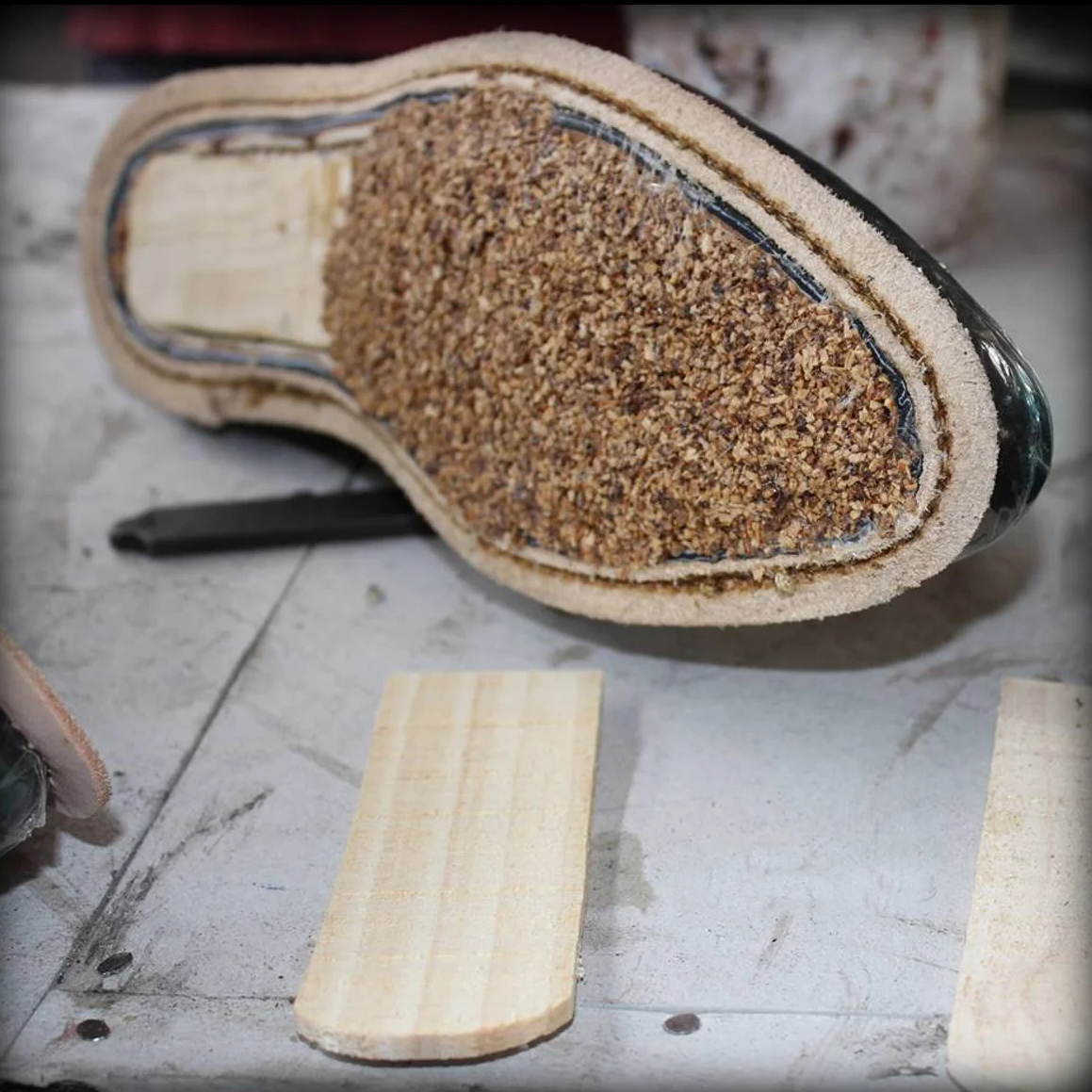
Once the welt is in place, work continues inside the bottom of the shoe — an area that will eventually disappear beneath the sole.
Cork fills the space over the insole, while the cedar shank reinforces the waist and helps support the structure of the shoe.
These elements are shaped and levelled before the outsole is added, creating a stable foundation for everything that comes next.
Some of the most important work in a shoe is work you will never see.
No. 09
THE SECOND STITCH
THE SHOE IS BUILT
IN LAYERS.
Once the internal bottom has been prepared, the next step is the second stitch.
Here, the welt is stitched to the intersole, extending the construction from the underside of the shoe.
In some cases, this stitched layer may also become the final outsole. More often, however, it serves as an intermediate foundation onto which the final sole and heel will later be built.
The shoe is not built in one piece. It is built in layers.
No. 10
SOLE, HEEL & EDGE
WHERE THE SHOE
MEETS THE GROUND.
At this stage, the final bottom begins to define much of the character of the shoe.
Crepe is one of the most distinctive materials in our workshop — and an unmistakable part of the traditional creeper silhouette. Its texture, cushioning and characteristic profile have made it a house classic.
But it is far from the only option. Depending on the design and intended use, a pair may be finished with leather, rubber, Vibram or mixed sole constructions, with different thicknesses and heel profiles.
Once the final sole and heel are built, the edges are trimmed, shaped and refined until the entire bottom becomes one coherent structure.
This is where construction becomes stance.

No. 11
FINAL FINISHING
THE LAST
OPERATIONS.
The structure is complete, but the work is not.
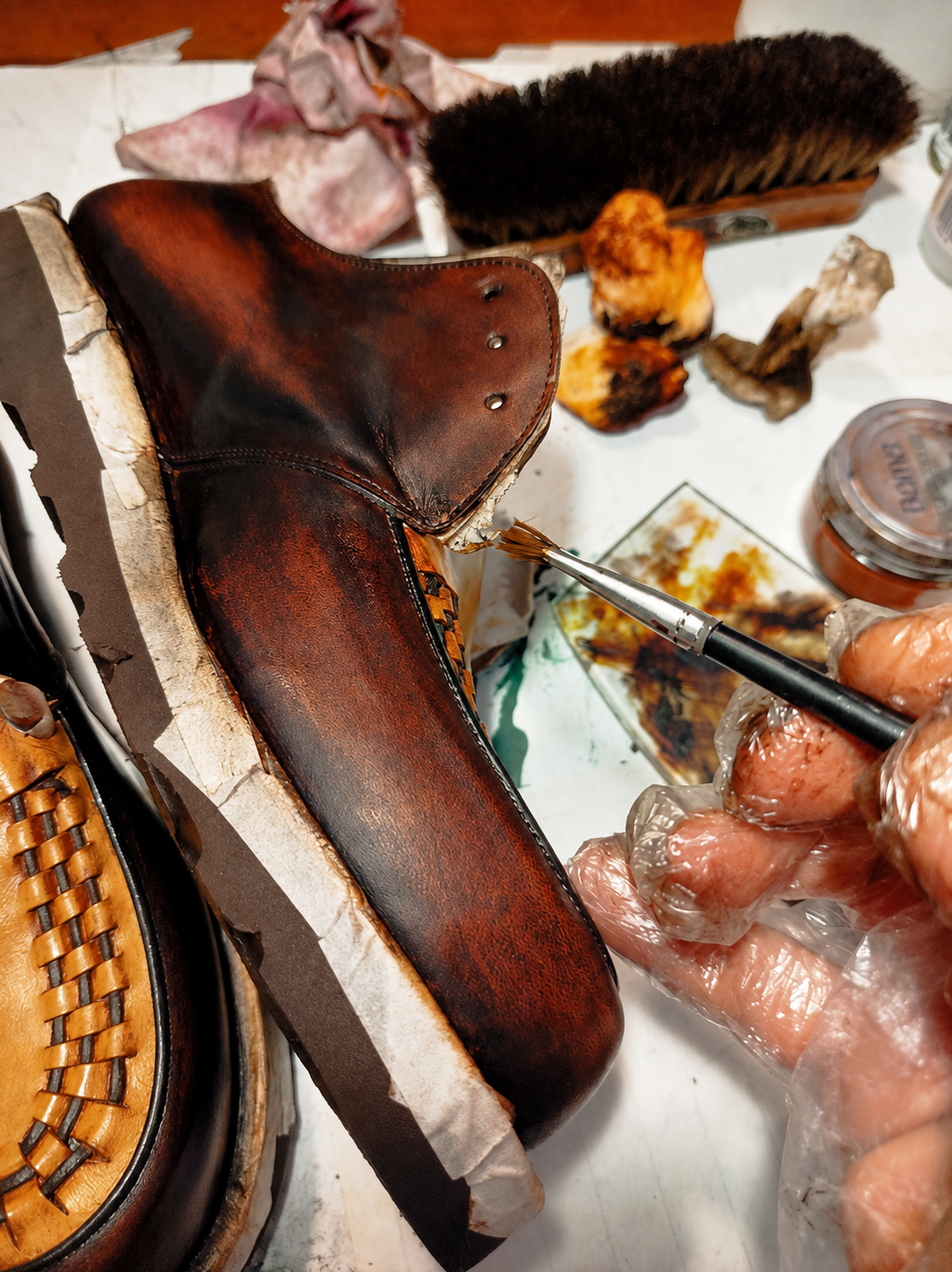
Edges are refined, surfaces are cleaned and conditioned, and the leather receives the finishing work required by the design — from a natural polish to more complex hand-applied patinas.
The last is removed, the interior is finished and the pair is inspected as a whole: symmetry, stitching, edges, sole, finish and final presentation.
The difference between finished and truly finished lives in the details.
250+ OPERATIONS LATER.
ONE PAIR.
MADE FOR ONE PERSON.